Fixes That Prevent Larger Failures
Roof Repairs in Williston for leaks, damaged shingles, and flashing failures following storms or freeze-thaw stress
Wind lifts a few shingle tabs during a spring storm, exposing underlayment to UV radiation that degrades it within months. Williston Roofing Company repairs damaged shingles, reseals flashing, and patches underlayment tears before water penetrates sheathing and triggers rot in roof decking and wall framing. Prompt repairs cost a fraction of the structural work required once leaks compromise multiple building components, and they extend the functional life of aging roofs by addressing localized failures without triggering full replacement projects.
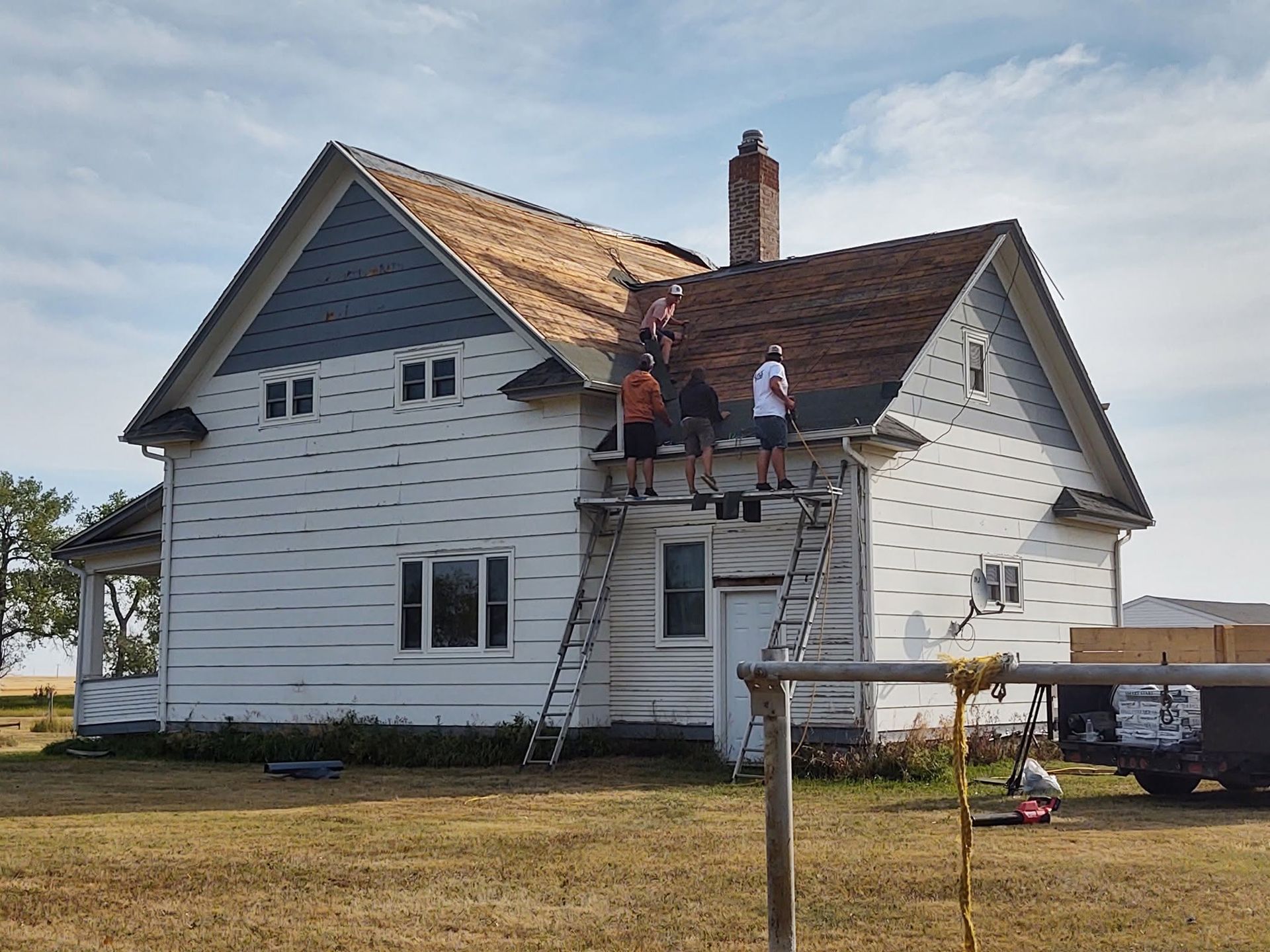
Repair work includes removing damaged shingles by lifting surrounding tabs and pulling nails, then sliding new shingles into place and refastening with corrosion-resistant nails driven into solid decking. Flashing repairs involve removing old sealant, repositioning metal to restore laps and drainage planes, and applying polyurethane caulk that remains flexible through temperature swings. Valley repairs may require weaving in new shingles or installing metal flashing sections where debris has worn through the original waterproofing layer, and vent boot replacements address cracked rubber seals that no longer grip pipe penetrations tightly.
Request service to address visible damage, active leaks, or conditions identified during roof inspections before minor issues escalate into emergency failures.
What Repair Work Actually Accomplishes
Repairs restore the waterproof integrity of roofing systems by eliminating paths for water intrusion, whether those paths result from mechanical damage, sealant failure, or material degradation. Technicians match shingle colors and styles to existing roof sections, ensuring repairs blend visually while providing the same wind and moisture resistance as the original installation. Flashing repairs recreate overlapping joints that channel water away from wall intersections and into gutters, preventing the sidewall leaks that occur when gaps allow water to run behind exterior cladding.
Once repairs are complete, you'll see replaced shingles that lie flat without lifted edges, flashing that sits flush against surfaces without gaps, and sealant lines that appear fresh and complete around penetrations. Attic inspections confirm that no new water stains appear after rain events, and moisture meters verify that sheathing and insulation have dried out following leak repairs. The repaired sections perform identically to undamaged roof areas, shedding water and resisting wind without weak points that could fail during the next storm.
Repair strategies depend on roof age and overall condition—isolated damage on roofs under fifteen years old typically warrants targeted repairs, while widespread shingle curl or granule loss on systems approaching twenty years suggests that full replacement provides better value than ongoing patch work. Williston Roofing Company evaluates whether repairs buy five years of additional service or whether advancing wear makes them a short-term fix.
Questions Before Starting Your Project
Homeowners facing repair decisions often ask about timing, material matching, and how to distinguish between repairable damage and conditions requiring replacement.
What types of damage are repairable versus requiring full replacement?
Localized wind damage, small leak areas, and individual flashing failures are repairable when the surrounding roof sections remain sound, but widespread granule loss, multiple leak points, or shingles curling across entire slopes indicate system-wide aging that makes replacement more economical than ongoing repairs.
How quickly do small leaks cause structural damage if left unrepaired?
Active leaks saturate insulation and sheathing within weeks, promoting mold growth and wood rot that spreads to rafters and wall framing—delays of even one season can triple repair costs by adding structural carpentry to roofing work.
When is it possible to match existing shingle colors for repair sections?
Manufacturers maintain color consistency within product lines, allowing close matches for roofs under ten years old, but UV exposure fades shingles over time—older roofs may show color contrast between new and weathered sections until the entire surface ages uniformly.
How do repair costs compare to replacement when multiple areas need work?
Repairs make sense when damage covers less than twenty percent of the roof area and the system has at least five years of expected life remaining, but costs approach replacement pricing when multiple slopes need work or when underlying decking requires extensive replacement due to rot.
What weather conditions are required for safe and effective repairs?
Repairs require dry sheathing, temperatures above forty degrees for sealant curing, and wind speeds under twenty miles per hour for safe ladder work—Williston's spring and fall weather provides the most reliable windows for outdoor roofing work.
Williston Roofing Company dispatches crews to assess damage, provide repair estimates, and complete work using materials that match your existing roof system. Call (701) 339-2345 to report roof damage and schedule a repair evaluation for your property.