Panels Designed for Decades of Weather
Metal Roofing in Williston for properties requiring minimal maintenance and superior hail resistance
Hail events in western North Dakota often leave asphalt shingles dimpled and cracked, forcing repairs every few years. Williston Roofing Company installs standing-seam and corrugated metal roofing that dents but does not puncture under two-inch hailstones, maintaining waterproof integrity while shingle roofs require replacement. Metal panels expand and contract with temperature changes without splitting, and their interlocking seams prevent wind-driven rain penetration even when gusts exceed seventy miles per hour during spring storms.
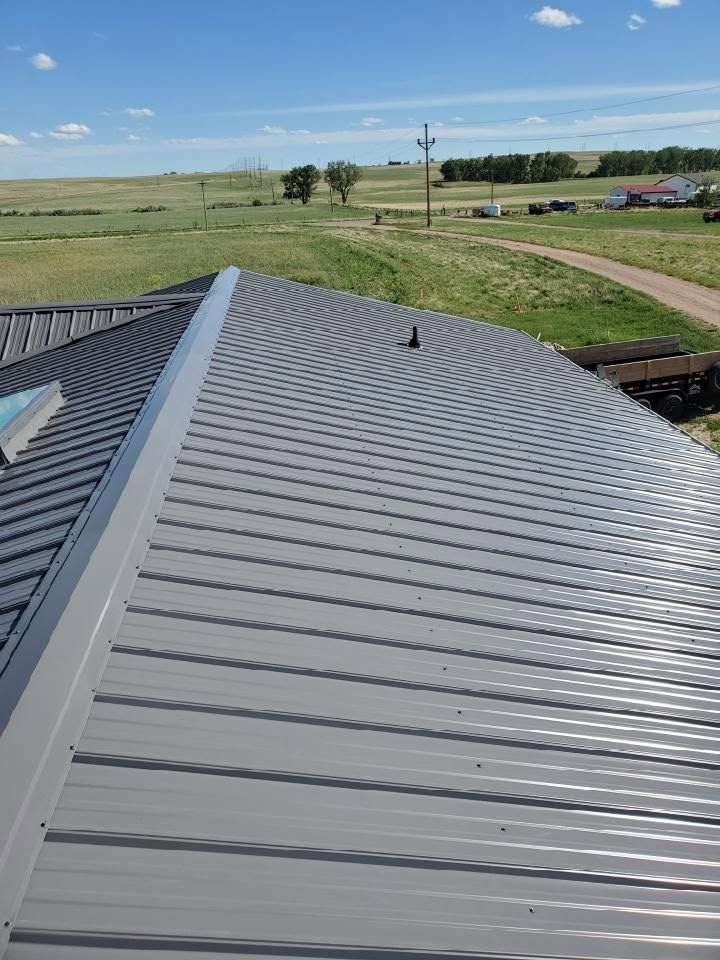
The installation process involves fastening panels to purlins or directly to roof decking using concealed clips that allow thermal movement without creating leak points. Standing-seam profiles feature raised ribs that channel water away from fasteners, while corrugated styles use exposed screws with neoprene washers that compress to seal penetrations. Reflective coatings on metal surfaces reduce heat absorption by up to thirty percent compared to dark asphalt, lowering attic temperatures and cutting cooling costs during summer months when roofs bake under fourteen hours of daily sun exposure.
Arrange an on-site consultation to review panel profiles, gauge options, and installation methods suited to your roof pitch and structural capacity.
Why Standing-Seam Systems Outlast Alternatives
Standing-seam panels lock together without exposed fasteners, eliminating the primary failure point in roofing systems—the hole. Clips attached to the deck engage panel edges, allowing the metal to expand up to a quarter-inch per ten-foot section as temperatures shift from negative twenty in January to ninety-five in July. This movement prevents the buckling and oil-canning that occurs when panels are rigidly fastened and have nowhere to go as they thermally expand.
Once installation completes, you'll see clean lines without visible screw heads, valleys that shed snow and ice without damming, and ridge caps that interlock to block wind penetration. Rain runs off faster than on textured shingles, reducing moisture retention that leads to algae growth and moss accumulation. The roof surface remains free of granule loss, cracking, and curl because metal does not degrade under UV exposure the way asphalt compounds do—performance remains consistent for fifty years or longer with no required maintenance beyond occasional debris removal.
Metal roofing costs more upfront but eliminates the replacement cycles that asphalt requires every two decades. The system includes trim pieces that seal gable ends, eave edges, and transitions to chimneys or skylights, along with underlayment that provides a secondary moisture barrier during installation and throughout the roof's service life.
Answers to Frequent Service Questions
Property owners considering metal roofing typically ask about noise, installation requirements, and performance during extreme weather events.
How loud is metal roofing during rainstorms?
Solid roof decking and attic insulation absorb most impact noise, making rainfall sound comparable to asphalt shingles—homes with open purlin systems may benefit from adding insulation batts to further dampen sound transmission.
What gauge metal provides adequate durability without excessive weight?
Twenty-nine-gauge steel balances strength and weight for residential applications, resisting denting from hail while remaining light enough for standard roof framing, though twenty-six-gauge offers additional impact resistance for properties in high-hail zones around Williston.
When does metal roofing require recoating or refinishing?
Factory-applied finishes typically last thirty to forty years before chalking or fading becomes noticeable, at which point recoating restores appearance and extends waterproofing for another two decades without panel replacement.
How does snow shed from metal panels compared to shingles?
Metal's smooth surface allows snow to release in sheets once temperatures rise above freezing, which can create avalanche zones near eaves—snow guards are installed to control shedding patterns and protect landscaping or entry areas below.
What prevents lightning strikes on metal roofs?
Metal does not attract lightning more than other roofing materials, but it does safely conduct strikes to the ground without igniting, making it one of the safest roofing options during electrical storms common to the northern plains.
Williston Roofing Company provides material samples and performance data that demonstrate how metal roofing handles the specific conditions your property faces. Request a free consultation to compare standing-seam and corrugated options, review color selections, and receive a detailed installation estimate.